
ommentary
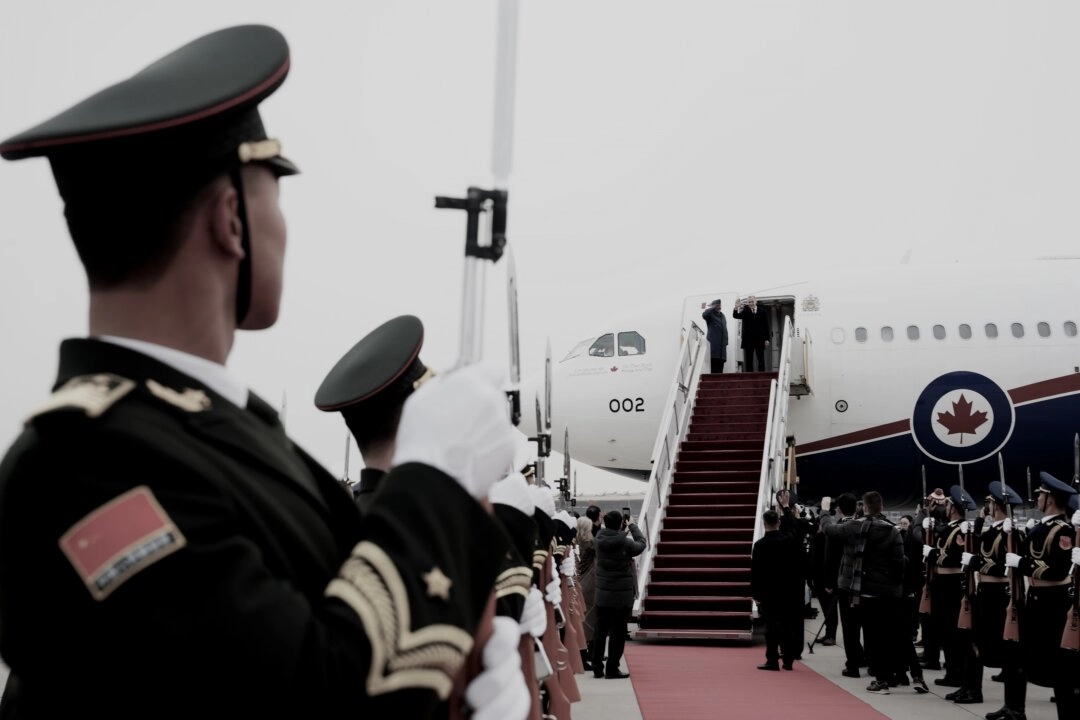
Canadian Prime Minister Mark Carney was in China recently making trade agreements and talking about “new global realities” and a “new world order.” It was a major shift from his campaign rhetoric, when he answered a question about Canada’s biggest security threat with one word: “China.” His language was likely meant to flatter China’s dictator, Xi Jinping, and chasten U.S. President Donald Trump. It could fail at both. Mr. Xi expects subservience from China’s trade partners and Mr. Trump is not easily cowed.
Beijing wants China to displace the United States as a global “hegemon.” Doing so requires changing the “old world order,” which since World War II the United States has largely led. Beijing wants the chance to compromise U.S. allies like Canada through trade deals, and move the world’s diplomatic and economic centers, including the United Nations, World Bank, and International Monetary Fund, away from the United States. An optimal solution for the Chinese Communist Party (CCP) would be to move them to Beijing and Shanghai rather than New York and Washington, DC.
Mr. Carney’s “new era” remarks in Beijing were one possible step towards that end. He said that Canada’s “new strategic partnership” with China includes “our commitment to multilateralism and strengthening global governance.” He referred to closer Canada-China law enforcement cooperation and a new set of Canadian trade relationships, including with China. He said that by 2030, Canada would produce 50 million tons of liquified natural gas annually, “all of which will be destined for Asia.” He apparently seeks to retaliate against U.S. tariffs with a Canadian reorientation of at least some of Canada’s trade towards China.
The apparent retaliation is for two of Canada’s top complaints against the United States, including Washington’s “trade war” of increased tariffs on Canada, and U.S. consideration of military options in the acquisition of Greenland from Denmark, a NATO ally of both the United States and Canada. In response to questions about U.S. plans for Greenland, Mr. Carney noted that he discussed them with Mr. Xi. He said he intends to honor Canada’s NATO obligations, which implies that Canada would help Denmark militarily defend Greenland from the United States.
U.S. tariffs have incentivized some of Canada’s auto industry to move to the United States. The Canadian deal with China is meant to respond to this issue, but fails on multiple metrics. The deal decreases Chinese tariffs on Canadian agricultural exports in exchange for decreasing Canadian tariffs on Chinese electric vehicle (EV) exports. That gives China a foot in the door of Canada’s auto market, ultimately increasing the pressure on Canada’s auto industry. It also improves the international trade environment for China’s automotive and battery sectors, making them more formidable challengers to European carmakers.
Meanwhile, the deal moves Canada further down the road into a mercantile relationship with China based on agricultural exports. In the long-term, that will weaken Canada’s industrial relationship with the United States and its access to high-growth technology sectors. As China increases its trade and political relations with the world, Beijing could displace Washington as the hub of global politics. This is a strategic misstep of significant proportions as Canada could be relegated to a pawn of Beijing against the United States rather than a trusted member of a U.S. alliance system in support of global democracies.
The United States is not blameless in the deterioration of U.S.-Canada relations, as should be clear from the above. That deterioration is visible in the auto sector above all else. In 2024, the United States and Canada imposed coordinated tariffs on Chinese car exports, and Beijing responded with retaliatory tariffs against Canada that decreased Chinese imports from Canada by over 10 percent in 2025. After the United States imposed tariffs on Canada, Ottawa is so desperate for exports that it is reaching back to China for agricultural gains in exchange for slashing 100 percent tariffs on Chinese EVs to just 6.1 percent. This is for 49,000 Chinese EV imports into Canada. Some experts worry the vehicles’ electronic sensors could be hacked by Beijing for intelligence collection, or worse. They certainly serve China’s auto industry as a foot in the door of Canada’s auto market.
Mr. Carney’s move is indicative of a larger trend of many democratic economies coming close to making concessions to Beijing for access to its market. South Korea, Germany, the United Kingdom, and the United States itself, are all planning state visits to China soon to try and make deals that will improve their access to China’s market. The problem is that those deals often come with major diplomatic concessions and increased trade dependence on China. Over the long term, these concessions increase the CCP’s leverage and reach over the global economy and its governance.
Without a more unified position by the world’s democracies, the CCP could win and create a new world order with itself at the head. This is something that no country, including the United States, Canada, or Denmark, should want to risk.
Views expressed in this article are opinions of the author and do not necessarily reflect the views of The Epoch Times.