Commentary
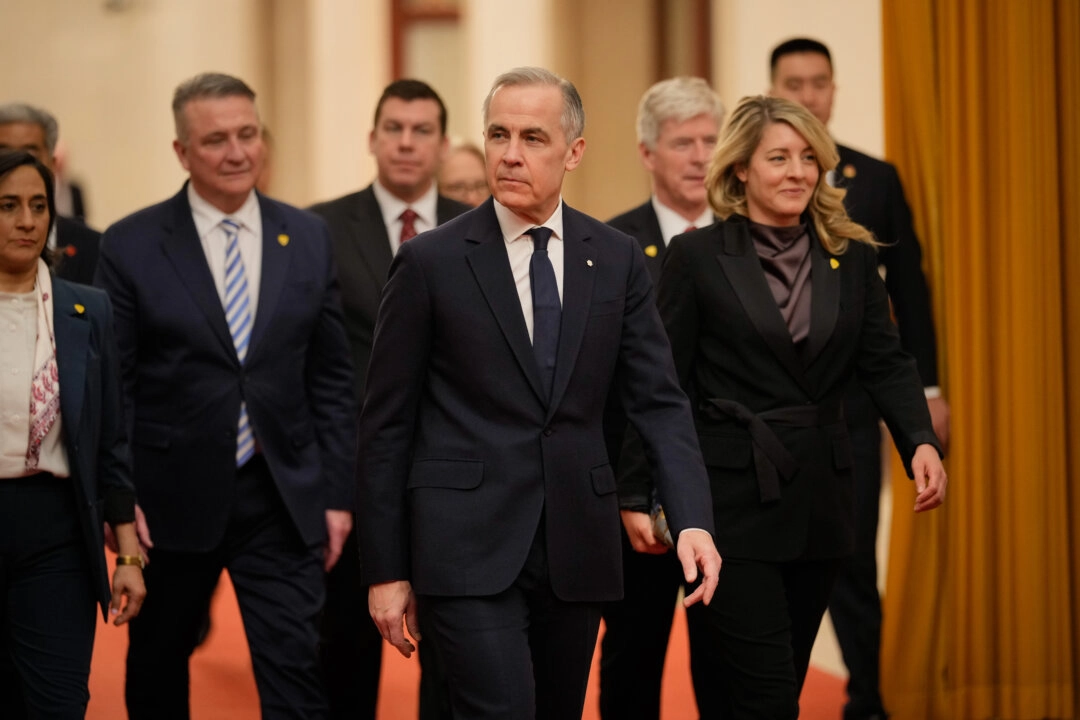
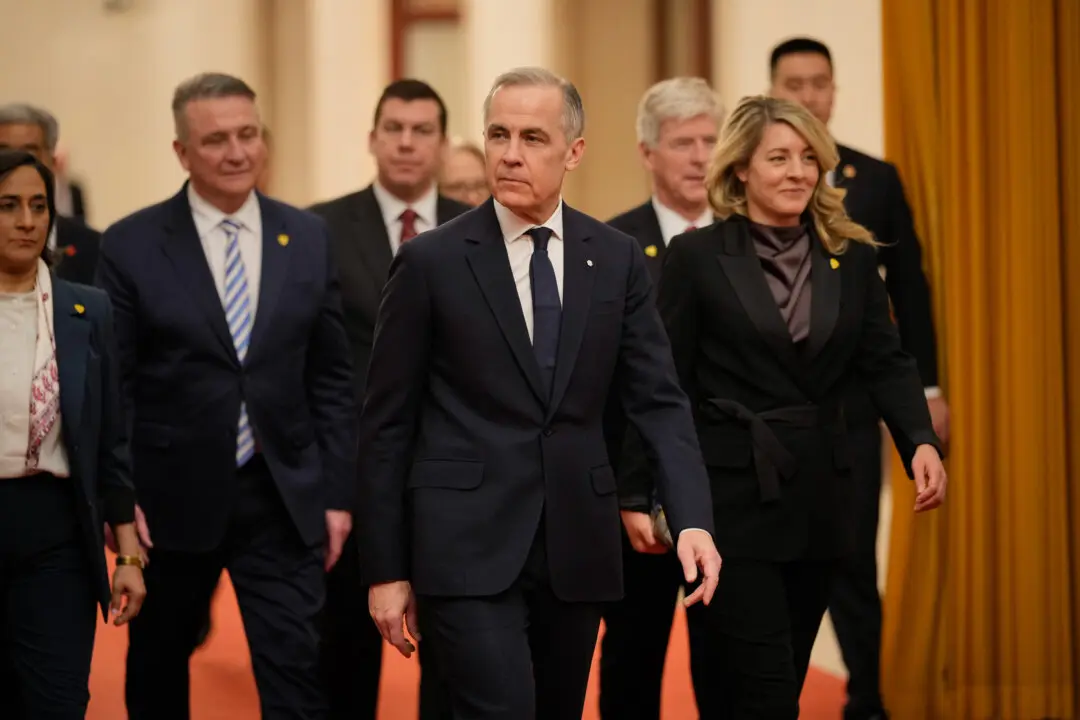
During his visit to China, Prime Minister Mark Carney spoke about Ottawa-Beijing relations entering a “new era,” characterizing it as a strategic partnership, with references to a “new world order” signalling ambitions beyond standard bilateral engagement.
Canadians should pause here. Not because diplomacy with China is optional, but because the gap between recent warnings and current rhetoric has become impossible to ignore.
Only months earlier, the prime minister stated that China represents the single greatest threat to Canada. That assessment was not controversial. It reflected intelligence reporting, public inquiries, and allied assessments documenting foreign interference, economic coercion, and pressure directed at diaspora communities.
Canadians witnessed those dynamics firsthand through the detention of two Canadian citizens for political leverage by China and repeated efforts by Beijing to exploit regulatory and financial gaps, making the shift toward a strategic partnership difficult to reconcile without a clear explanation.
What has changed? What risks have been resolved? And why are Canadians now being asked to accept a narrative that contradicts earlier statements without explanation?
Words matter in foreign policy. Declaring a new era or a strategic partnership is not rhetorical decoration. It signals intent to allies and adversaries alike. When those signals follow months of warning language about threat and vulnerability, the shift requires justification. Without it, the change reads less as a coherent strategy and more as an adjustment driven by short-term calculation.
That calculation appears tied to Canada’s increasingly strained trade relationship with the United States. Faced with uncertainty, the government seems intent on signalling alternatives by deepening engagement with China. What may appear as diversification on paper risks overlooking how global markets and alliances respond to mixed strategic signals.
Economic resilience relies on stability and trust, both of which are undermined when markets and supply chains are confronted with inconsistency. When a country presents itself as strategically aligned with competing systems that are themselves in open rivalry, it introduces uncertainty rather than balance, and uncertainty carries a real economic cost.
China’s growing energy insecurity, driven by rising demand, constrained domestic supply, and reliance on exposed maritime routes, sharpens these risks. Because energy security underpins industrial output, military readiness, and internal stability, Canada’s resource base becomes strategically appealing.
For Canada, this presents a classic entrapment risk. Energy cooperation framed as a commercial opportunity can quickly become strategic leverage when dealing with a system that does not separate economic engagement from state power. Long-term supply arrangements or infrastructure commitments can limit policy flexibility and expose Canada to pressure when interests diverge. This is not theoretical. It is a pattern observed repeatedly in China’s external economic relationships.
The alliance consequences are equally serious. Canada’s economic and security foundations remain deeply tied to the United States. Washington does not treat energy, trade, security, and geopolitics as separate files. It views them as integrated elements of national power. When Canada signals strategic alignment with China while relying on the United States as its principal market and security guarantor, it complicates trust at a moment when trust is already strained.
This is where credibility becomes decisive. A government cannot credibly warn its citizens that China represents a primary threat while presenting that same actor abroad as a strategic partner, particularly in sectors with long-term strategic implications. The inconsistency is not merely rhetorical. It weakens Canada’s negotiating position with both Beijing and Washington.
To American policymakers, this appears less like strategic sophistication and more like unreliability. Hedging may play well domestically, but in alliance politics, it is often interpreted as duplicity. That perception undermines Canada’s ability to advocate for its interests in trade negotiations, industrial policy disputes, and security cooperation.
There is also a democratic dimension that deserves attention. Strategic shifts of this scale require explanation. They should be examined in Parliament and tested against intelligence and alliance obligations. Instead, Canadians are being asked to accept sweeping declarations about a new era and a new world order without clear limits or safeguards. That approach assumes consent rather than earning it.
Engagement with China does not require language that implies strategic alignment or shared direction, particularly when the underlying risk environment has not materially improved.
Effective statecraft is consistent. It explains its shifts and aligns words with policy. It does not present one narrative to Canadians, another to Washington, and a third to Beijing. Yet that is increasingly how Canada’s foreign policy appears, with contradictions playing out publicly while remaining unanswered in Ottawa. Silence, in this context, is itself a signal.
A new era may indeed be taking shape in global affairs. Entering it without clarity, consistency, or credibility, however, is not leadership. It is improvisation.
Canada’s foreign policy must rest on stability, coherence, and honesty. Without those foundations, hedging becomes exposure, and strategy gives way to drift.
Scott McGregor is a Canadian intelligence veteran, author, and doctoral researcher specializing in hybrid warfare, transnational crime, and threat finance. He is Managing Partner of Close Hold Intelligence Consulting Ltd. and Senior Fellow at both the Council on Countering Hybrid Warfare and the Frontier Centre for Public Policy.
Views expressed in this article are opinions of the author and do not necessarily reflect the views of The Epoch Times.