
The tech titan’s pledge comes shortly after President Donald Trump urged the industry to ‘pay their own way.’

Microsoft said on Jan. 13 that consumers will not pay more for their energy bills when the tech titan establishes data centers in communities across the United States.
In a blog post on the company’s website, Brad Smith, Microsoft’s president and vice chair, outlined a five-point community-first artificial intelligence (AI) plan.
“We’ll pay our way to ensure our datacenters don’t increase your electricity prices,” Smith wrote.
The software maker plans to pay utility rates high enough to cover its electricity costs and to work with utility companies to increase the electricity it requires. It will also innovate in its data centers to ensure they operate more efficiently and champion policies that deliver “affordable, reliable, and sustainable power.”
“There’s no denying that AI consumes large amounts of electricity. While advances in technology may someday change this, today, this is the reality,” Smith said.
Microsoft also pledged to replenish more water than it consumes.
As more tech companies consume enormous amounts of water to cool electronic equipment, the public has become increasingly concerned that water utility bills will surge or their wells will dry up.
But Smith said he believes his company will not contribute to the problem.
“For communities where water infrastructure constraints pose challenges, we will collaborate with local utilities to understand whether current systems can support the additional demand associated with datacenter growth,” he wrote. “If sufficient capacity does not exist, we work with our engineering teams to identify solutions that avoid burdening the community.”
As its data centers expand nationwide, Microsoft is committed to contributing to local tax bases for schools, parks, and hospitals, Smith said. It will also create jobs for residents in these communities.
Trump Presses Tech Giants
Microsoft’s statement comes soon after President Donald Trump urged technology companies to “pay their own way” and not rely on Americans to cover their power consumption through higher electricity costs.
“I never want Americans to pay higher electricity bills because of data centers,” Trump said in a Jan. 12 Truth Social post. “Therefore, my administration is working with major American technology companies to secure their commitment to the American People, and we will have much to announce in the coming weeks.”
The president alluded to Microsoft as one of the first to “make major changes.”
Utility bills have become a major affordability concern for U.S. households.
Last year, electricity costs increased by 7 percent nationwide, according to the Bureau of Labor Statistics. The cost of electricity has risen by 38 percent since 2021.
Additionally, average residential electric bills increased by almost 10 percent between 2024 and 2025, according to Mark Wolfe, an energy economist and executive director of the National Energy Assistance Directors Association.
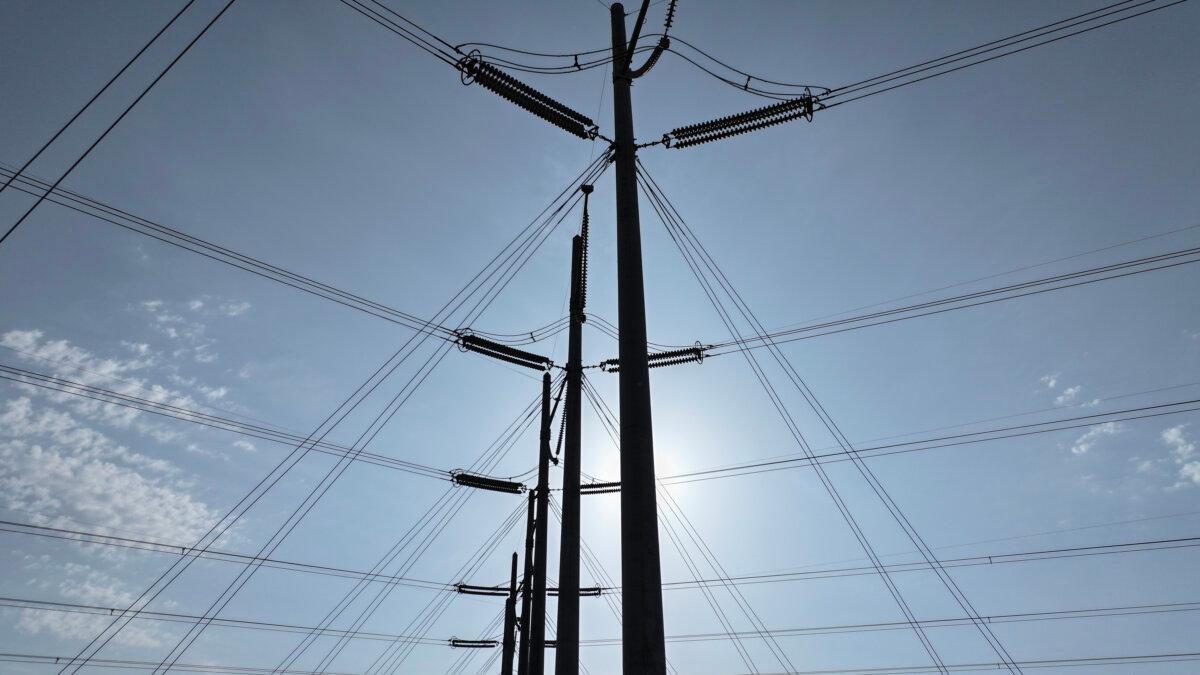
In a November report, he attributed the increase, in part, to intensifying demand from data centers and the costs of aging grid infrastructure, further noting that “regional capacity shortfalls are adding to system costs and driving higher consumer rates.”
Companies building these data centers are now focusing on states with the lowest energy costs, with one economist pointing to Arizona, Texas, and the central United States as key locations for the infrastructure.
While land availability is critical, so is power, says Rick Pederson, economist and chief strategy officer at Bow Rival Capital.
“You can’t simply point to land availability alone; the next critical factor is power—its cost and its availability,” Pederson said in a note emailed to The Epoch Times.
“These data centers are choosing to locate adjacent to low-cost power due to factors such as state regulation, transmission infrastructure, and interconnect access, all of which are vitally important to the boom we’re seeing.”
Electricity prices in Texas, he says, average about 8 cents per kilowatt-hour. By comparison, commercial users in California and New York pay approximately 30 cents and 21 cents, respectively.
“That cost differential attracts major manufacturers and large power users, including data centers,” he said.
The operators of more than 220 gigawatts’ worth of large-scale projects have applied for permission to hook into the Texas power grid by 2030, based on December data from the Electric Reliability Council of Texas. A majority of those projects are data centers.
To ensure the public’s needs are met, the Texas Public Utility Commission suggested mandating that data centers pay $50,000 per megawatt of peak power.
Similar efforts being undertaken in other states.
Last year, Wisconsin local utility We Energies proposed a “Very Large Customer Tariff” that would require customers with very large electricity loads to commit to payment of their forecasted annual electricity usage, since their usage differs in scale from that of homes and businesses.
Aldgra Fredly contributed to this story.